
Mālama Pāku‘iku‘i
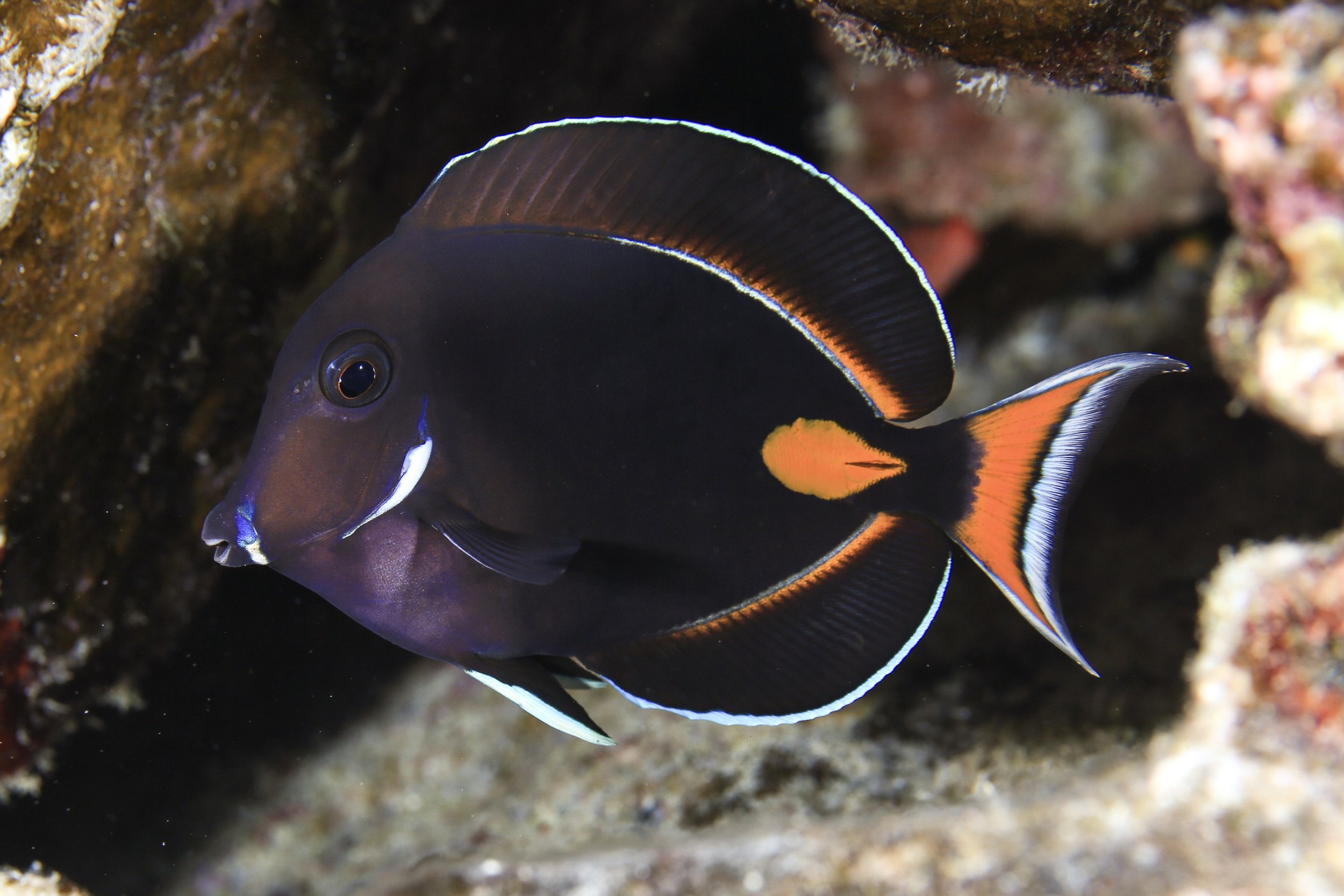
Do you have an ‘ono for pĀku‘iku‘i?
"We've been seeing fewer pākuʻikuʻi in West Hawai'i." Local communities and scientists noticed the decline - so a kapu was put in place to help them recover.
Kapu Means Protection - Fishing or taking pākuʻikuʻi is prohibited to help them recover.
No Take or Possession within West Hawaii Until: December 18. 2026
What is pākuʻikuʻi?
The pākuʻikuʻi is the common Hawaiian name for the Achilles tang (Acanthurus achilles), a striking reef fish known for its dark body and bright orange markings. As a herbivorous fish, pākuʻikuʻi contributes to reef health by controlling algal growth. Rich, balanced reefs are beneficial for biodiversity, shoreline protection, and other fisheries. With a lifespan of up to 29 years, pākuʻikuʻi depend on long-term reef health and responsible stewardship.
Where is the ban in effect?
The ban applies to the West Hawaiʻi Regional Fishery Management Area (FMA), which spans the west coast of Hawaiʻi Island from Ka Lae (South Point) to ʻUpolu Point, extending from the high-water mark out to state waters. More info.
Why raise awareness?
The ban represents a conservation response to precipitous declines in the pākuʻikuʻi population. Educating the public helps support compliance, stewardship, and long-term recovery.
Population Decline
According to the Herbivore Management Plan, pākuʻikuʻi in West Hawaiʻi have suffered severe depletion, with up to 95% decline in some local populations between 1999 and 2021.
Pressure from Aquarium Trade
The commercial aquarium industry heavily harvested pākuʻikuʻi. Over time, the catch declined even as the value per fish rose. Read article.
Adaptive Management
The Division of Aquatic Resources (DAR) used adaptive management rulemaking to respond quickly to this decline. Under this authority, temporary conservation measures were implemented.
The Rule: What’s Prohibited
● Effective Date The prohibition officially started December 19, 2022, after the State Board of Land and Natural Resources approved the new rule. More info.
● Legal Basis The ban is codified in Hawaiʻi Administrative Rule (HAR) § 13-60.41, which makes it illegal to take or possess any pākuʻikuʻi within the West Hawaiʻi Regional FMA. More info.
● Penalties Violating the rule can lead to administrative penalties under state law. More info.
● Duration The rule was initially adopted for a maximum of two years, with the possibility to extend for up to one more year upon approval by the Board of Land and Natural Resources and the State Legislature. More info.
● Extension In December 2024, the ban was extended for another two years by the Board of Land and Natural Resources until December 18, 2026.
Why This Kapu Matters:
Protect the pākuʻikuʻi population Overharvesting has put pressure on this important reef species. Temporary protection allows populations to stabilize.
Allow recovery for future generations By giving pākuʻikuʻi time to rebound, we help ensure that future keiki and ʻohana can continue to enjoy healthy reef ecosystems.
Support sustainable fishing practices Responsible stewardship today supports long-term fishing opportunities that align with pono resource management.
Honor community concerns and knowledge Local fishers, kūpuna, and scientists have raised strong concerns. This restriction respects ʻike kupuna and community-driven conservation efforts.
For further information
For further information on seasons, minimum sizes, and other regulations, consult the current Hawaii Fishing Regulations booklet, available from Division of Aquatic Resources offices and most fishing supply stores, click the link below.